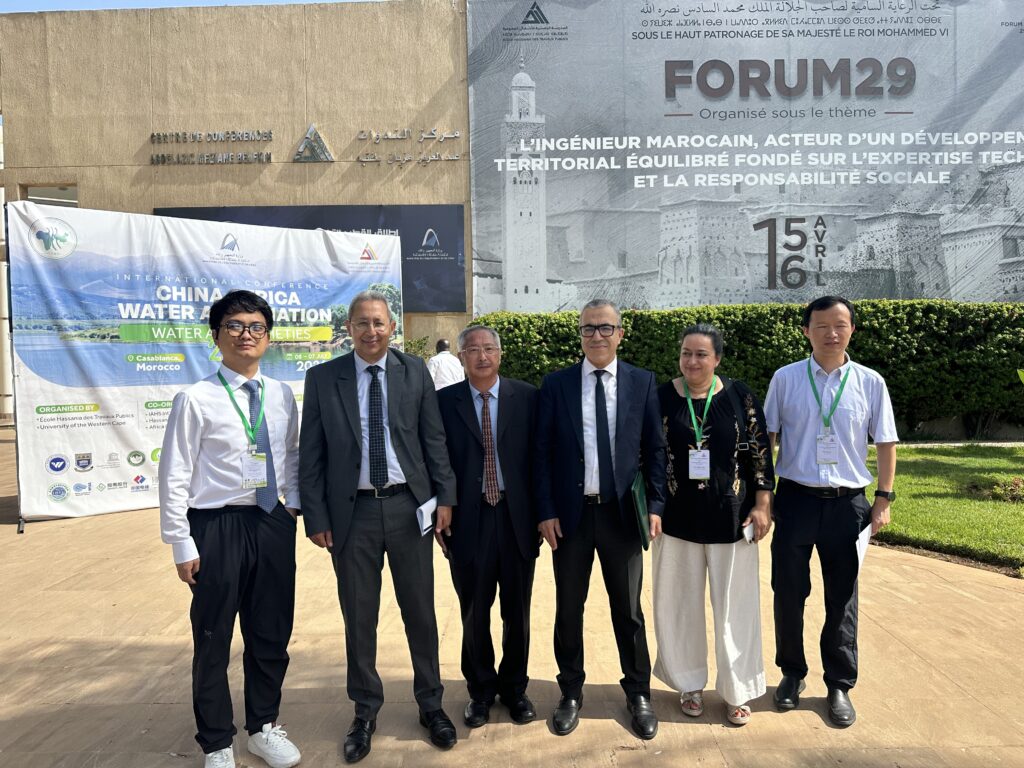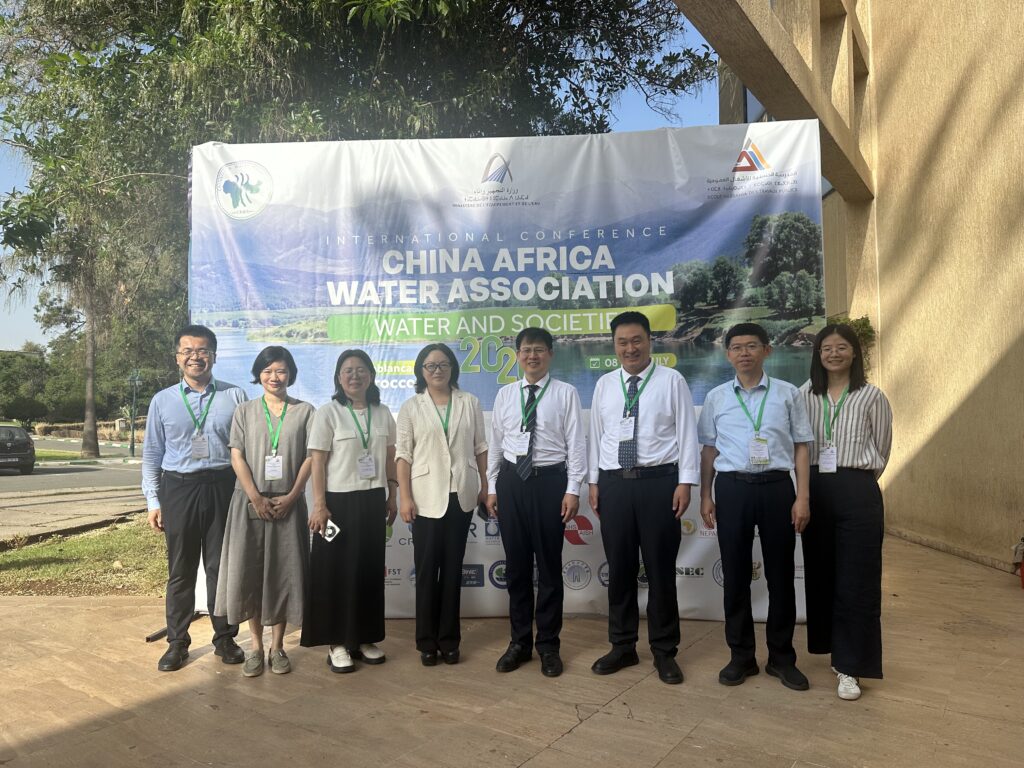
From 7 to 13 July, 2026, the 10th China-Africa Water Forum, organized by the China-Africa Water Association (CAWA), was grandly held in Casablanca, Morocco, under the core theme of “Water and Society.”
The forum was hosted by École Hassania des Travaux Publics (EHTP) and University of the Western Cape, with co-host by Casablanca’s Hassan II University, African Groundwater Academy, and IAHS International Commission on Water Quality. It was supported by multiple prestigious international institutions, including UNESCO, Chinese National Chapter of IAH, Sino-Africa Joint Research Center and University of Rwanda. Ministry of Equipment and Water in Morocco and the local Chinese community in Casablanca provided support and integrated logistical services.
The event brought together leading scientific, educational, and industrial forces in the China-Africa water sector. Chinese participants included key water-focused universities such as Wuhan University, Sun Yat-sen University, Hohai University, China University of Geosciences (Beijing), Capital Normal University, Hunan Normal University, University of Jinan, Zhengzhou University, Chengdu University of Technology, North University of China, and Hebei University of Engineering; national-level research platforms such as the Chinese Hydraulic Engineering Society, China Institute of Water Resources and Hydropower Research, Yangtze River Scientific Research Institute, and Yellow River Conservancy Commission; and leading water-related enterprises including Shunyu Water and T.Y. Lin International (China). Around 100 Chinese and African water experts, young research scholars, and industry leaders gathered to conduct in-depth discussions on cutting-edge global water governance issues. Surrounding the Belt and Road Initiative, the forum served as a comprehensive, multi-tiered, and sustainable hub for pragmatic cooperation in the China-Africa water resources sector.
- Multi-Country Collaborative Organization Brings Together Water Wisdom; Opening Ceremony Signing Marks a New Chapter in China-Africa Water Cooperation
The opening ceremony on the morning of July 7th was moderated by CAWA Vice President Prof. Dedi Liu and EHTP’s Prof. Rachid Saadane. The Dean of EHTP and the Deputy Minister of Equipment and Water of Morocco delivered welcome speeches. Professor Xu Yongxin, Founding Chairman and Secretary-General of CAWA as well as UNESCO representative, make the opening address, extending a warm welcome to all attendees, thanking the Moroccan hosts, partner institutions, and representatives from various sectors, outlining the mission of this 10th CAWA forum, and officially declaring the conference open. A signing ceremony for a Memorandum of Understanding (MOU) on strategic cooperation was held between the Chinese Hydraulic Engineering Society and CAWA, formally establishing a long-term collaborative framework for joint water research, high-level talent cultivation, overseas water project development, and shared academic platform building.
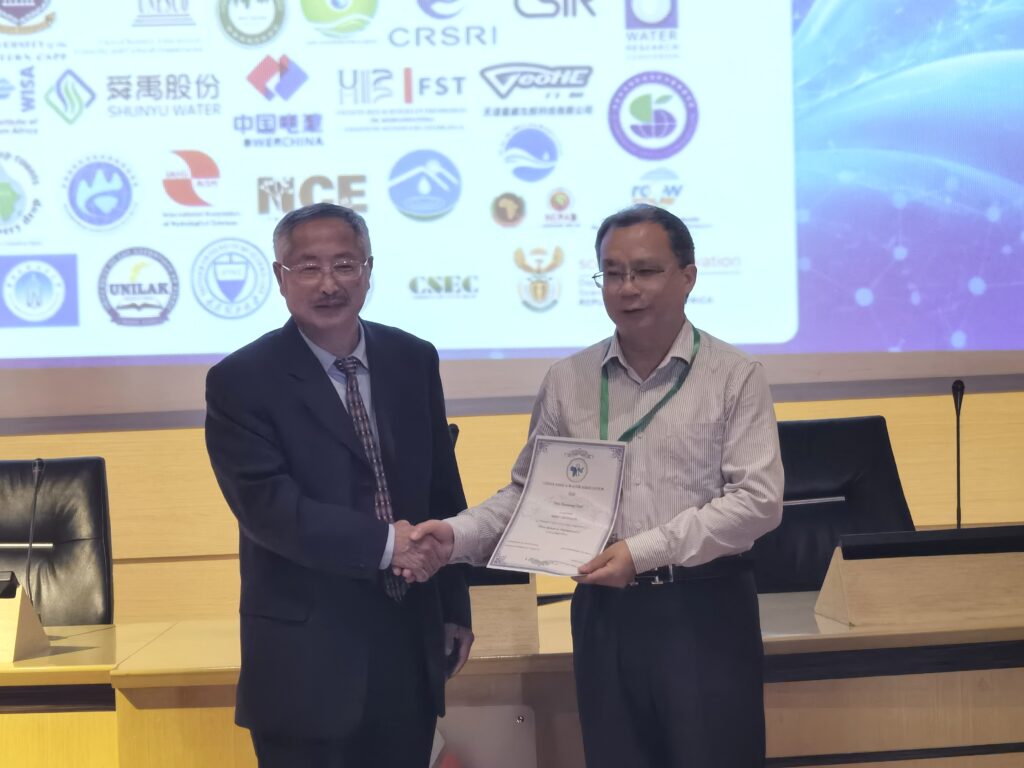
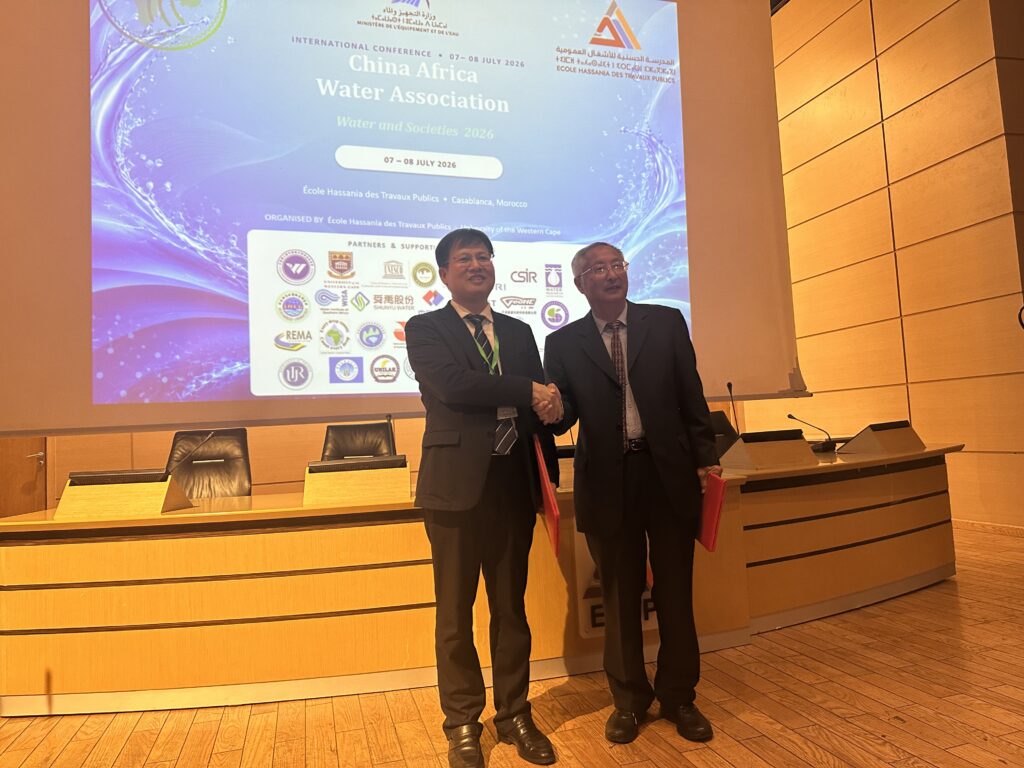
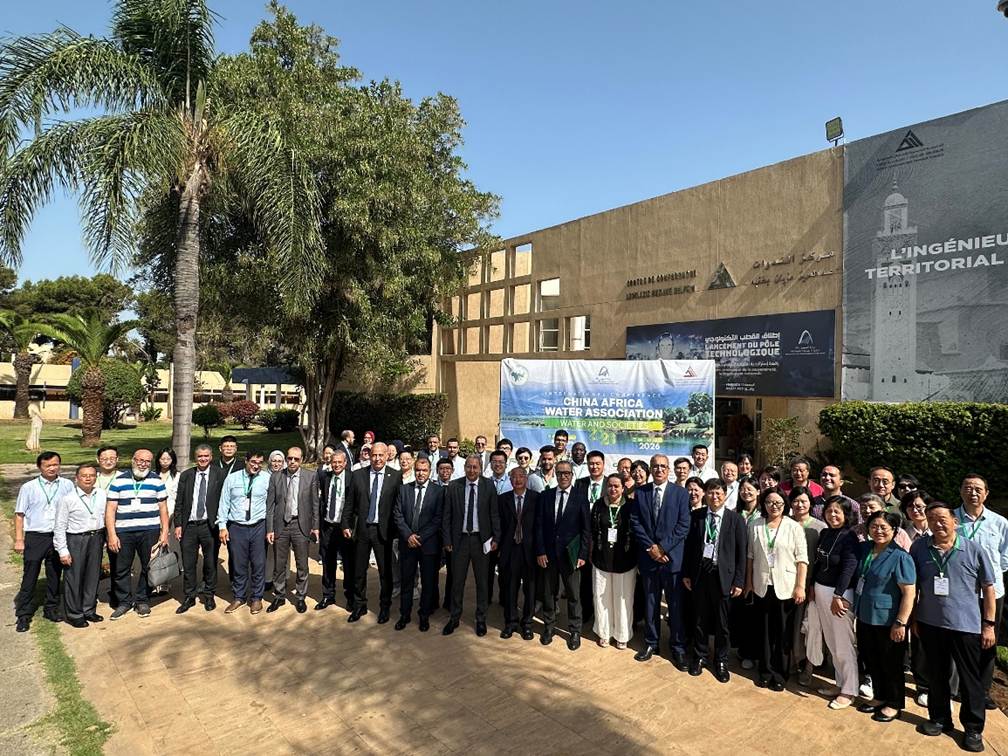
During the ceremony, CAWA presented its 2026 Achievement Award to Professor Xiaohong Chen from Sun Yat-sen University, in recognition of his long-standing outstanding contributions to China-Africa water resources exchanges. Deputy Minister of Equipment and Water, Mr. Sahibi of Morocco, held a special meeting with representatives from the Chinese Hydraulic Engineering Society and Shunyu Water, reaching consensus on the localized adaptation of advanced Chinese water technologies in North Africa and the integrated development of water-related industries. Following a group photo of all participants, the keynote academic sessions commenced.
All academic agendas were successfully completed on July 8. CAWA Vice President Prof. Dedi Liu delivered a comprehensive academic summary, Secretary-General of CAWA Prof. Xu gave closing remarks, the Moroccan co-hosts expressed their thanks, and mutual gifts were exchanged, bringing a successful conclusion to this academic exchange.
2. Academic Seminars Integrated with Field Expeditions – Theory and Practice Mutually Empowering Water Governance Innovation
The core academic sessions took place on 7–8 July, featuring keynote presentations and poster displays. They focused on frontier issues in global water governance across several key research directions:
- Climate and Extreme Hydrology Responses:Comparing drought, rainstorm, and flood patterns in China, Morocco and Africa; using remote sensing and machine learning to build precipitation models for semi-arid regions; analyzing water security challenges and opportunities in Africa and the Middle East.
- Integrated Watershed Water Resources Management:Sharing governance experiences from China’s Yellow River, Heihe River, and Jinsha River basins; analyzing runoff, sediment, and inter-basin water transfer mechanisms; exploring virtual water accounting and sustainable rural water management models in the Mekong region.
- Hydraulic Engineering and Flood Control:Discussing dam safety under climate stress, SAR slope monitoring in reservoir areas, water-sediment responses in the Loess Plateau, AI-based flood forecasting, and integrated urban flood management solutions.
- Groundwater and Eco-Hydrology:Covering numerical groundwater modeling, aquifer parameter inversion, groundwater carrying capacity assessment in cold and arid regions, analyzing nitrogen transport in estuaries, and using GIS to assess ecological vulnerability in wetlands and coastal zones.
- Urban Water Affairs and Water-Saving Innovations:Exchanging ideas on reclaimed water recycling, intelligent pipeline leakage monitoring, water-sensitive urban planning, and water-efficient agricultural equipment.
- Water Pollution Control and Ecological Restoration:Sharing China’s standardization experience in water infrastructure and promoting complete technologies for heavy metal containment and ecological restoration in rare-earth mining areas.
- Digital and Smart Hydrological Technologies:Promoting advanced research tools including SAR remote sensing, GIS spatial analysis, physics-informed neural networks, and Bayesian statistics.
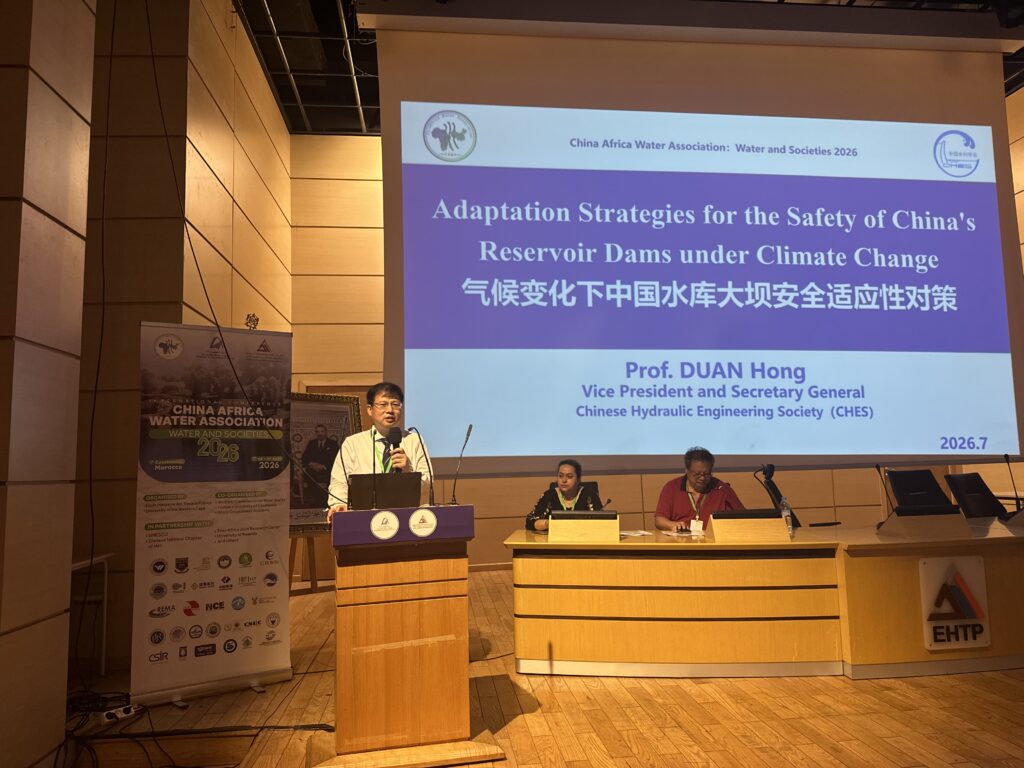
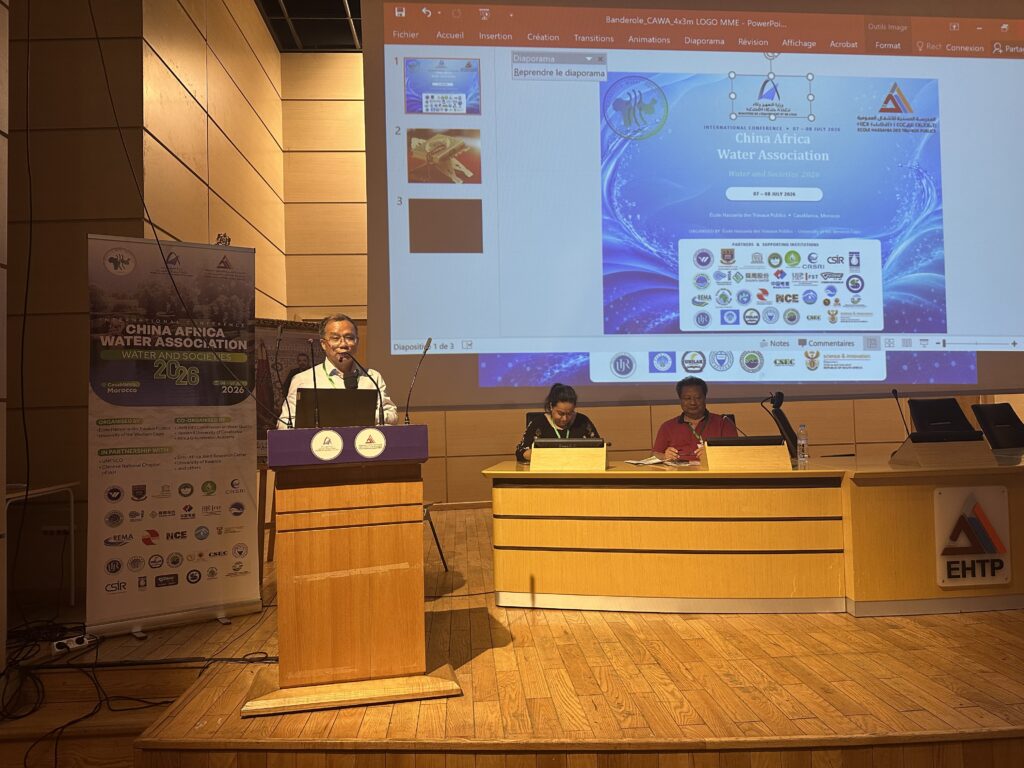
A dedicated poster session showcased detailed research outcomes on groundwater modeling, lake water-sediment risks, estuarine ecological evolution, mining-area soil remediation, and African drought management, providing a platform for young scholars to exchange ideas.
Following the academic sessions, the organizing committee arranged a comprehensive field trip across Morocco from 9 to 13 July. Participants visited typical semi-arid watersheds, estuaries, and other landforms in North Africa, investigating local geography, culture, and geology. By comparing hydrological characteristics between China and Africa, they achieved theoretical-practical validation while experiencing North Africa’s unique cultural heritage.
III. Strengthening Organizational Framework to Build a Long-Term Community for China-Africa Water Cooperation
During the forum, the launch of CAWA’s Water Supply and Drainage Professional Committee marked a significant leap forward in the association’s institutional capacity and professional service delivery, positioning it to more effectively drive the deep integration of industry, academia, and research in the China-Africa water sector. CAWA Secretary-General Prof. Xu emphasized that over its decade-long commitment to China-Africa water exchanges, the forum has consistently adhered to the principle of “sincerity, real results, amity, and good faith” in Africa cooperation, aligned with the high-quality development requirements of the Belt and Road Initiative, and continuously built an integrated platform for regular academic exchanges, advanced technology transfer, and water industry collaboration.
In the years ahead, CAWA will continue to play its core bridging role in the China-Africa water sector. On one hand, it will promote the localization of China’s mature watershed management technologies, comprehensive water standards systems, and digital smart hydrological solutions across African nations. On the other hand, it will incorporate distinctive African research outcomes in water resources management, fostering joint China-Africa research projects, two-way talent exchange programs, and cross-border water industry cooperation platforms – all contributing China-Africa collaborative strength to global water security and sustainable development.